Transparent Braces / Invisible Braces Cost & Prices
By the term “invisible” orthodontic appliances or braces, we refer to all orthodontic systems that are less noticeable or completely unseen, unlike conventional metallic braces, which are clearly visible. These may include:
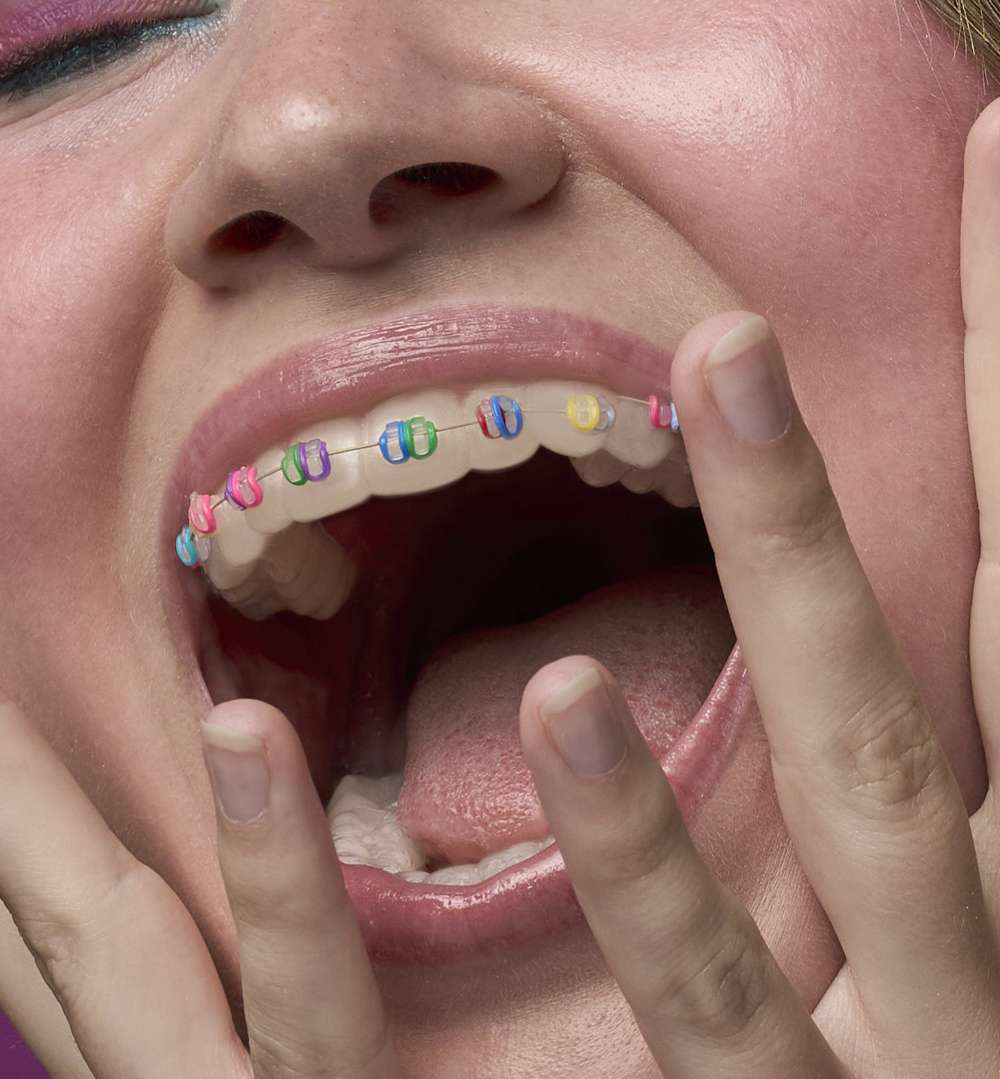
- clear external braces (plastic or ceramic)
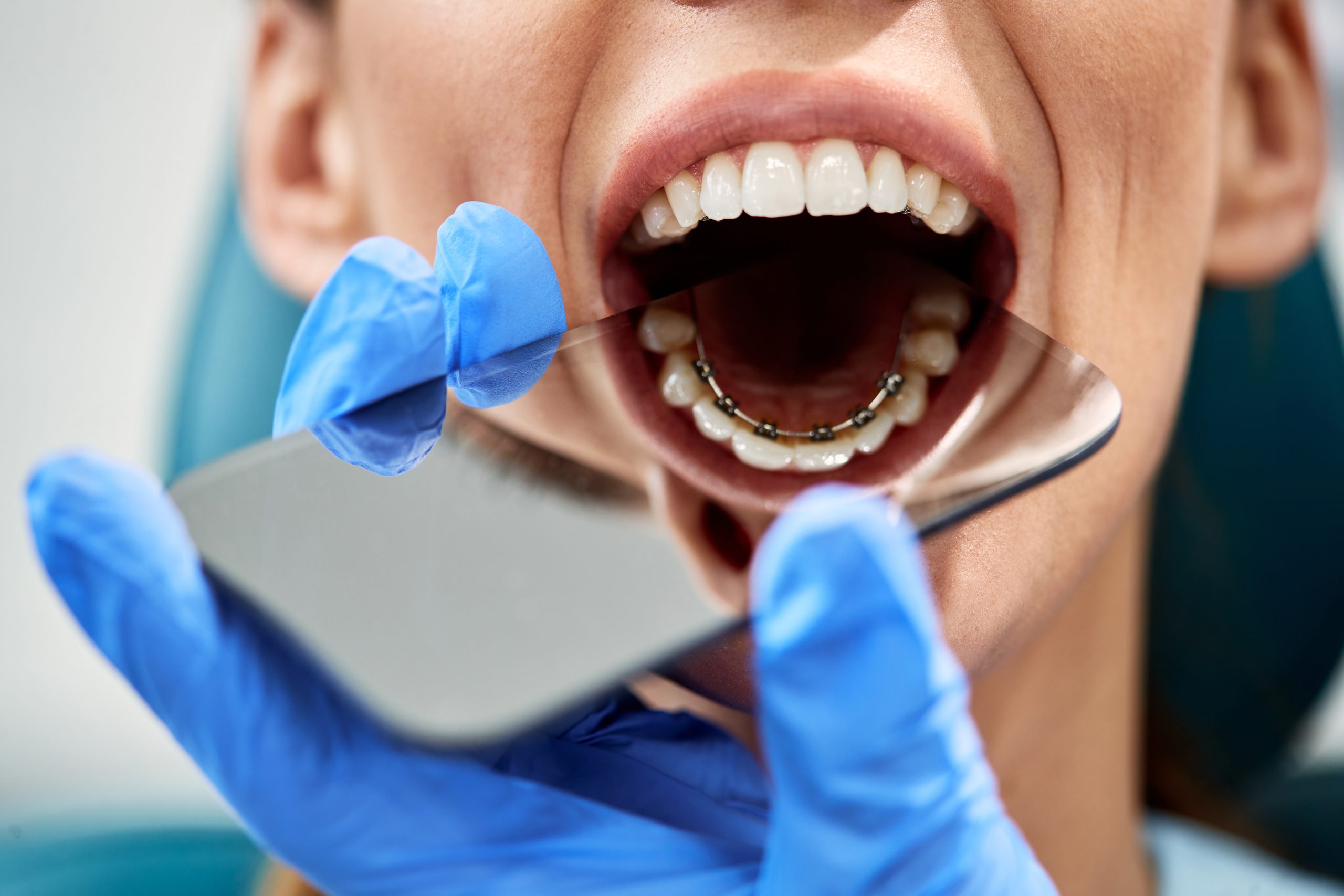
- lingual (internal) braces, placed on the inner surface of the teeth
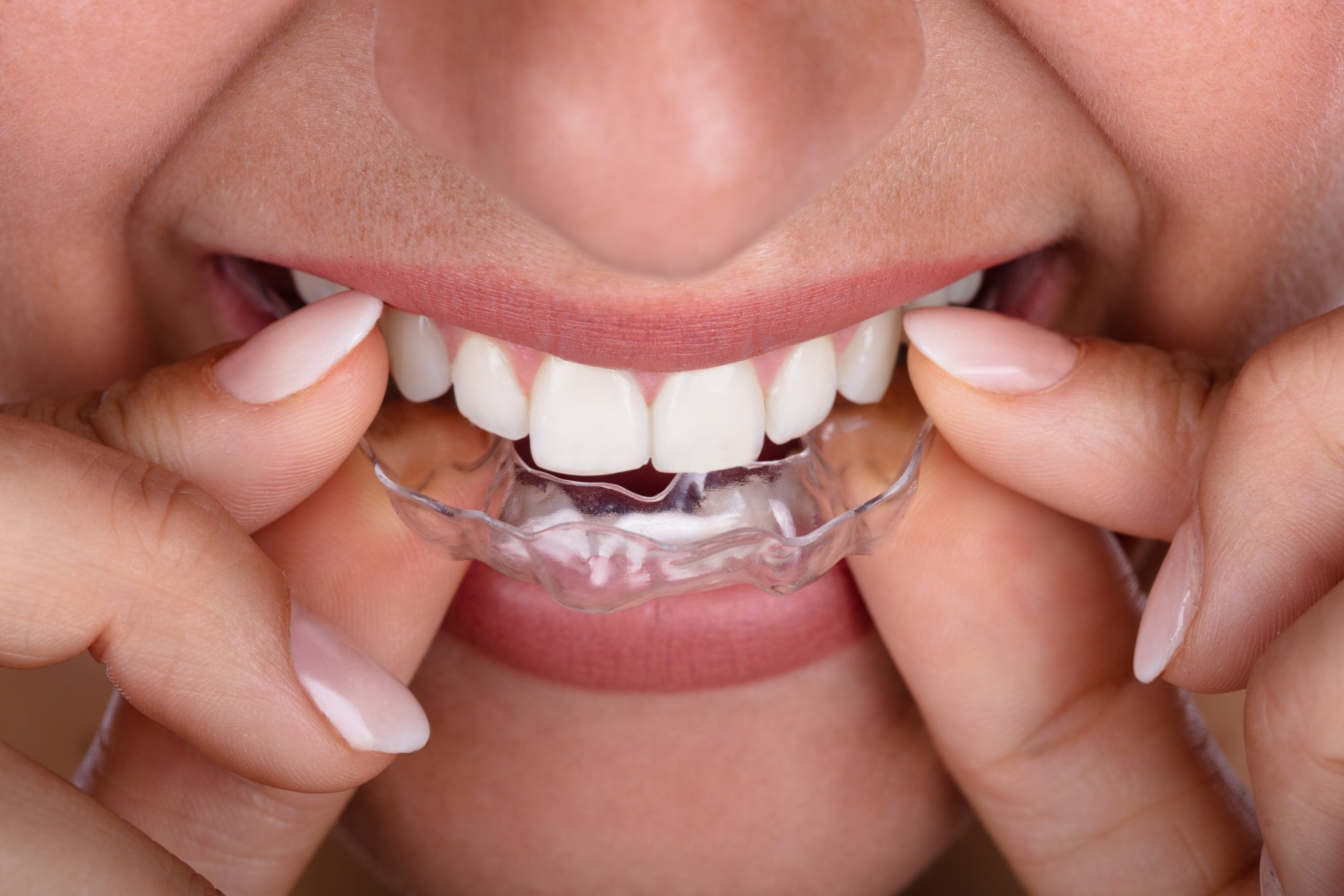
- and clear aligners.
Below, we outline the advantages and disadvantages of each method.
We are Open Tue-Wed-Fri, 16.00-21.00.
Diocharous 13, Hilton Hotel area.
Call us at
+30 210 7253133,
f+30 210 7253143
or mail us at
info[at]DrKonstantinosKontos.gr




Fixed Clear Braces
These are bonded to the outer surfaces of the upper and lower teeth and are made from CERAMIC materials. This material gives the appliances a white color very close to that of the teeth or even makes them TRANSPARENT. The advantage of these orthodontic appliances is that they retain almost all the properties of conventional braces while being more aesthetic and discreet. However, they are not completely invisible since the wire that connects them is usually metallic and therefore visible. New material technologies have not yet been able to produce reliable ceramic or plastic wires that can be used throughout the entire orthodontic treatment while maintaining consistent and dependable results. Their greatest advantage compared to the following methods is the significantly lower treatment cost.
Lingual (Internal) Braces
These are brackets bonded to the inner (lingual) surfaces of the teeth, making them completely invisible. They are the most suitable appliances for patients seeking truly invisible orthodontic treatment. The treatment plan designed by the orthodontist can be implemented without compromise; however, this method is technically much more challenging and requires greater experience and training from the orthodontist. Additionally, the cost of treatment is often significantly higher due to the materials and manufacturing processes of these brackets, as well as the technical complexity involved. Treatment duration may also be longer compared to conventional external appliances.
Lingual braces can be placed on both upper and lower teeth. In this case, the functional space of the tongue is significantly reduced, meaning that the patient requires more time to adjust in terms of speech (articulation) and hygiene (cleaning/brushing) of the appliances. An intermediate option is the placement of lingual brackets on the upper teeth in conjunction with conventional (external) brackets on the lower ones.
Clear Aligners
This is an orthodontic treatment based on a different philosophy aimed at straightening crowded and misaligned teeth. According to this method, tooth movement and the orthodontic correction are achieved using specialized plastic aligners made of multilayered thermoplastic material. These successive aligners are removable, typically worn for one to two weeks each, after which the patient progresses to the next aligner, and so on. Depending on the treatment plan, the aligners are placed on both the upper and lower jaws, and less commonly, on only one of the two. Their primary goal is patient comfort and treatment flexibility. The main advantage of clear aligners is their aesthetic appeal, as they are almost invisible – though not entirely – and the ease of maintaining oral hygiene, thanks to their removability.
In order for orthodontic treatment to be effective, for crooked teeth to be moved and straightened, and for the orthodontist to complete the treatment within the predetermined time period, the braces must be worn 20-22 hours a day. The biggest advantage of this method is that the braces are much less visible than conventional braces, but not completely invisible like internal braces. This is mainly due to the fact that small white (tooth-colored) components are glued to the teeth to increase the effectiveness of the movements and their control.
The second important advantage of the method is that because the braces are mobile (they can be removed by the patient), they make brushing teeth easier and therefore oral hygiene more effective. The duration of treatment with braces can be shorter or longer than with conventional braces, depending on the case and the treatment plan.
The experience of the orthodontist and the correct selection of cases to be treated with clear braces are crucial for the duration of the treatment. The total cost is on average higher than with metal braces, while the final result again depends on the experience of the orthodontist, the diagnosis, the appropriate selection of cases and of course the cooperation of the patient. It is a very promising method since it still has great room for development, among other things due to its technological capabilities.
What are the best orthodontic braces?
There are now quite a few clear orthodontic braces on the global market. The first company to establish itself in the field was Invisalign and it remains the largest selling company in the world in this type of orthodontic devices. The success of Invisalign was such that it became synonymous with clear orthodontic braces, but it is not an exclusive treatment method but a trade name.
In recent years, other companies have also been active in the development of this method with significant success, while most large manufacturers of general orthodontic mechanisms and devices now have a department that deals exclusively with clear braces. Examples include Spark (Ormco), Clarity Aligners (3M), Clear Aligners, ClearCorrect (Straumann), OrthoCaps, etc.
All of the above companies, as well as others of a smaller scope, provide reliable solutions to the orthodontist for a successful treatment and ultimately a beautiful smile. Since the responsibility for the design and implementation of the treatment lies exclusively with the orthodontist, it is up to him to choose the appropriate brace provider that will meet his therapeutic needs. The development of digital technology, 3D imaging and printing and the production of new materials constantly creates competition in the market that is to the benefit of both orthodontists and, above all, patients.
Which treatment is right for me?
The decision on which method is best for your orthodontic treatment depends on the diagnosis, the treatment plan and the therapeutic options of the orthodontist. What is certain is that there is almost never a single way to successfully complete an orthodontic treatment. The correct planning of the treatment is the most important stage for its successful completion and there it is possible to discuss together your preferences and how these can be harmonized with our therapeutic options.
Η συγκράτηση του θεραπευτικού αποτελέσματος είναι πολλές φορές εξίσου σημαντική όσο και η ίδια η θεραπεία και απαιτεί εμπειρία και γνώση από τον ορθοδοντικό για να μπορέσει ο ασθενής να διατηρήσει το τέλειο χαμόγελο για μια ζωή!
Do all orthodontists use the lingual technique? Is it possible to use another technique in the upper and lower jaw?
The lingual technique, i.e. the placement of brackets (braces) on the back surface of the teeth to perform orthodontic treatment, is a technically difficult method that requires knowledge and experience from the orthodontist and therefore is not a method that is used as much as conventional braces or transparent Invisalign-type splints. However, if the lingual technique is done correctly, it is possible to give equally good therapeutic results as other orthodontic techniques.
The lingual technique is significantly more expensive than conventional braces and also than treatment with transparent splints (Invisalign-type). It also requires great experience and skill from the orthodontist as well as the corresponding training. For these reasons, it is not used by all orthodontists. The transparent splint technique is often preferred over the lingual technique because it is technically much less difficult.
It is possible to combine techniques and use lingual braces in the upper jaw where the mechanisms are more visible and transparent braces or conventional braces in the lower jaw. This reduces the cost of treatment, makes the mechanisms more tolerable for the patient since the space for the tongue is not limited as much as if lingual braces were used in the lower jaw and ultimately creates a more flexible treatment plan.
What options are there for someone who does not want their braces to be visible?
If someone wants their braces or any other accessory not to be visible at all during orthodontic treatment, then the only solution is the lingual technique, i.e. placing the brackets (braces) on the back of the teeth.
Transparent braces provide the opportunity to perform orthodontic treatment in a less visible way, but they are not completely invisible. It is often necessary to glue small tooth-colored attachments onto the front surface of the teeth, which slightly affect the aesthetics of the teeth and the mechanisms.
The third aesthetic option for orthodontic treatment is transparent/ceramic braces. They are noticeably less visible than metal braces, but they are not completely invisible.
What is the cost of a therapeutic intervention with lingual technique or Invisalign membranes?
Orthodontic treatment is priced based on the assessment of many factors such as the severity of the case, the estimated duration of the treatment, possible problems or difficulties that will have to be addressed during its duration and of course the patient’s choices regarding the types of mechanisms and techniques. Thus, an extensive treatment in the upper and lower jaw may cost from 1,500-5,000 € with transparent splints and from 3,000-7,000 € with lingual braces.
These prices are merely indicative and may change based on the treatment plan and the patient’s needs. Very simple cases where crooked teeth can be straightened in a short period of time and with a small number of transparent splints, prices may be lower.
Can one achieve the perfect smile with orthodontic treatment alone?
Orthodontic treatment is the basis for creating the ideal smile. However, smiles are not the only goal of orthodontic treatment. Correct occlusion, therapeutic prevention of any recurrence, functional balance of the teeth and tissues around them and the creation of appropriate conditions for proper cleaning are all goals that a comprehensive treatment plan must include.
However, there are cases where the final result is impossible to be completely successful without the intervention of other dental specialties such as prosthetics, periodontics or even surgery. Especially in adult patients, in whom it is possible that the teeth have suffered damage to their external surface and morphology as a consequence of their initial abnormal position, it is impossible to achieve the perfect smile without restoring the original morphology of the upper and lower (less often) teeth. In other words, prosthetic interventions must be made either with porcelain veneers, crowns or even with composite resin in order to achieve the ideal aesthetic result and the perfect smile.
However, it is not only the morphology of the teeth that creates a beautiful smile, but also the morphology of the gums and surrounding tissues. In some cases, the intervention of the periodontist is necessary in order to use surgical techniques to give the gums a normal anatomy and a good aesthetic result.
In even more difficult cases, surgical movement of the jaws in relation to the rest of the face is necessary for both the functional and aesthetic restoration of the problem. However, orthodontic treatment before and after surgical intervention is an integral part of the treatment plan.
Does orthodontic treatment take longer using the lingual technique or the Invisalign method?
The duration of orthodontic treatment is a function of many factors, the most important of which are the severity and complexity of the initial problem, the therapeutic goal, the age and oral health of the patient and his cooperation with the orthodontist. In order to achieve the shortest possible duration of orthodontic treatment, it is necessary to draw up a realistic plan that will take into account all the parameters that may affect the final result. In addition, the experience that the orthodontist has with each technique is crucial for the fastest completion of the treatment. Therefore, it is impossible to answer whether the lingual technique or that of transparent braces (Invisalign type) is faster in completing orthodontic treatment. Choosing the method that best suits each case is the safest way to carry out the treatment as soon as possible.
In general, orthodontics takes a long time. It takes time to move teeth, regardless of which technique is chosen, and treatments usually last more than 6 months, often more than 12. There is no research data to show that treatments with the lingual technique or the Invisalign technique last less or longer than the other. However, there is often clear evidence in favor of one method or the other in relation to the initial problem, which will lead to a faster completion of the treatment if the appropriate method is chosen.
There are cases where teeth move at a slower rate, especially in older patients or in patients with coexisting dental problems (e.g. periodontal disease). It is also possible that systemic diseases such as osteopenia or osteoporosis can have an impact on the rate of tooth movement. In any case, choosing the appropriate method is what ensures the fastest completion of the treatment. After all, the goal is not only to straighten crooked teeth, but to achieve the best possible functionality and aesthetics for the oral and maxillofacial system as a whole.
Do healthy teeth need to be sacrificed in order to achieve a beautiful result?
One of the most common orthodontic problems is the lack of space to arrange the teeth in their correct positions in the jaws, the so-called crowding. The result of the lack of space is crooked teeth, which erupt (emerge) in such a way that they can fit into the limited space. Many times, when the lack of space is great, it is not only crooked teeth that are the problem but also the impaction of teeth, that is, their failure to erupt. This means that some teeth remain trapped inside the jaws without ever managing to erupt due to the very limited space. These teeth are called impacted.
The therapeutic methods used in orthodontics to create space so that crooked teeth can straighten are the following:
- widening of the dental arches, i.e. placing the teeth in arches of larger diameter and therefore more space to accommodate them.
- grinding of the interdental surfaces. With this method, the teeth are ground on the surfaces between them to slightly reduce their size. When this method is applied to several teeth, it results in the creation of excess space so that they can straighten the crooked teeth and be placed correctly on their bone base.
- tooth extraction. When methods (1) and (2) cannot create the required space, then tooth extraction is the most appropriate solution. Usually, teeth in the upper and lower jaw are selected that are already burdened, e.g. have fillings or endodontic treatments (aponeurosis) and therefore their prognosis is worse than that of healthy teeth. Usually, 2 teeth in the upper jaw and one or two teeth in the lower jaw are extracted. The teeth that are most often preferred are the first or second premolars because crowding usually occurs in the front teeth and the premolars are closer to the crooked teeth so that it is easier to exploit the space created by the extractions. In the lower jaw, it is possible to extract one front tooth (sector) instead of 2 premolars when other conditions allow it.
The solution of permanent tooth extractions is generally a therapeutic protocol that is sought to be avoided in orthodontics, when other methods can provide a satisfactory therapeutic result, stable over time and safe with regard to the health of the remaining teeth. However, when this is not possible, permanent tooth extractions are a completely safe therapeutic option, time-tested, which often offers significant advantages over other alternatives, mainly in terms of the stability of the result of orthodontic treatment but also the health of the teeth and the tissues around them.
Is the result of orthodontic treatment stable? There are many cases that report that they had relapse or crooked teeth after orthodontics.
The stability of the result of orthodontic treatment is one of the most important challenges that the orthodontist has to face. Teeth and their supporting tissues have a kind of biological memory that creates the tendency to relapse. That is, the teeth tend to return to the positions they had before orthodontic treatment, and in which positions they had acquired a balance even though they were in abnormal relationships with each other and with the surrounding tissues, e.g. the gums.
The options that the orthodontist has to maintain the result stable are several. They focus mainly on the most perfect possible restoration of the occlusion, that is, the way in which the teeth meet and touch each other both during static positions and during functional movements of the lower jaw. This optimal restoration of the occlusion creates the right conditions for the lowest possible tendency for relapse. The detailed, thorough and comprehensive treatment plan is the key to this restoration.
After the treatment, the period of retention of the result always follows. In this, the teeth in the upper and lower jaw are held firmly in their new positions. This is achieved either with a thin wire permanently attached, usually to the 6 front teeth, or with a mobile device that covers the entire dental arch and is used at least 8 hours a day. Sometimes, especially in the upper jaw, the wire can cover only the 4 front teeth, while in other cases it can reach the first premolars. It is possible, depending on the initial problem, to use a combination of the above methods. In a few cases, where prosthetic restoration follows after the end of orthodontic treatment, it is possible for the prostheses to function as retaining devices, e.g. crowns joined together.
The time required for the retainer to remain is not fixed. There is research data that shows that after a few years the tendency for relapse is mitigated, but no one can guarantee that it will be completely eliminated. Therefore, many times when the initial problem was very serious, it is possible to decide on permanent lifelong retention. Usually, however, relapse appears more strongly in the first 2 years after the braces are removed.
The relapse mentioned above is called dental relapse. In treatments that were performed during the patient’s growth (around the period of adolescence) and that aimed to influence the development of the alveoli, that is, the bone in which the teeth are located, then skeletal relapse may also occur after the treatment. That is, the residual development of the skeleton and especially of the parts that carry the teeth may be unfavorable and spoil the result of the orthodontic treatment. It is important that the orthodontist be able to anticipate this risk as much as possible and, through the appropriate use of devices, try to mitigate or eliminate it.